













































USA – CASES
SCOTUS finds internet service providers not liable for users’ infringement

In a recent unanimous decision, the Supreme Court reversed a Fourth Circuit decision and held that internet service providers such as petitioner/defendant Cox Communications, Inc. are not contributorily liable for user conduct that infringes copyrighted works. Authored by Justice Thomas, the majority opinion (with two justices concurring in the judgment) clarified that an ISP is liable for contributory copyright infringement only if it induces users’ infringement or provides a service tailored to infringement. Relying on precedent, the Court reiterated that “contributory liability cannot rest only on a provider’s knowledge of infringement and insufficient action to prevent it.” The Court found Cox had not “induced” its users’ copyright infringement because Cox had not promoted infringement and had sent users warnings upon receiving notices of alleged infringement. Cox’s services, the Court determined, were not “tailored” to infringement because Cox’s internet services are capable of significant non-infringing uses. In a concurring opinion, Justice Sotomayor, joined by Justice Jackson, agreed that Cox was not contributorily liable under the facts of this case but warned that the majority opinion “unnecessarily limits secondary liability.” She writes, “this Court’s precedents have left open the possibility that other common-law theories of such liability, like aiding and abetting, could apply in the copyright context.”
It remains to be seen whether the Supreme Court’s narrowing of contributory liability will apply only to claims against ISPs and service providers or whether lower courts will apply the decision to similar claims brought against other defendants.
Parker Eudy
California State Appellate Court dismisses drag queen’s claim against Netflix

Lance Hara, a “well-known Drag Queen in Hollywood” professionally known as Vicky Vox, sued Netflix over Netflix’s use of Vox’s likeness and persona (but not her name) in an animated series. After the federal court dismissed Hara’s action under the Lanham Act, Hara filed suit in California state court. The state court complaint asserted violation of California’s statutory and common law rights of publicity and invasion of privacy by appropriation. The defendants moved under California’s Anti-SLAPP (“Strategic Lawsuit Against Public Participation”) statute, which provides for a motion to dismiss a lawsuit on the basis that it was brought to impede the defendant’s right of free speech. The trial court denied the motion, but the California Court of Appeals reversed, writing, “The creation of a television show is an exercise of free speech,” and the “use of real people in fiction is generally protected by the First Amendment, for good reason.” The court ruled, “defendants’ actions merit First Amendment protection that bars any possibility that [Hara] could prevail on the merits of any of her claims.” The decision is available here.
Richard Lehv
Amazon updates Brand Registry procedures

Amazon has added a layer of verification for new U.S. trademark registrations in Brand Registry accounts. Earlier in the review process, Amazon will now reach out to the attorney listed as the “Attorney of Record” or “Correspondent,” asking the attorney via email to verify that the person submitting the trademark to Amazon as part of the Brand Registry is the owner of the trademark registration or is authorized to be submitting the registration to the Brand Registry.
The Attorney of Record will then have just seven days to respond to Amazon to verify whether the application is authorized or not. Attorneys receiving these emails will have the option to request an additional 20 days to verify whether the submission is valid, but if the Attorney of Record does not respond to Amazon’s verification email within this timeframe, the request to connect the trademark(s) in the Amazon Brand Registry will be rejected.
Therefore, those responsible for your Amazon Brand Registry account should be made aware of this change so that when they submit new marks to Amazon, they’ll know to work with the Attorney of Record to seek this verification.
Please contact us if you have any questions regarding this change to Amazon’s procedures.
Todd Martin
USA – DESIGN LAW DEVELOPMENTS
PTO requests comments on whether U.S. should join WIPO Design Law Treaty

The Riyadh Design Law Treaty was adopted by WIPO Member States in Riyadh, Saudi Arabia, on November 22, 2024. On March 13, 2026, the USPTO ran a notice in the Federal Register requesting comments until June 11 on the potential impact and ramifications of the Treaty on U.S. design patent law. Considerations and exemplary questions include whether provisions of the Treaty are consistent with U.S. design patent law and existing international agreements, and what impact the law might have on the U.S. if it were to join. In 2024, the U.S. sought a similar request for comments on a prior draft version of the Treaty.
Practitioners have often grappled with significant differences in registering and patenting designs around the world. The Riyadh Design Law Treaty is aimed at creating a streamlined and consistent system for protecting and registering design patents globally, in a manner similar to the Patent Law Treaty of 2000, Trademark Law Treaty of 1994, and Singapore Treaty on the Law of Trademarks of 2006. The Treaty seeks to set forth uniform requirements for, inter alia, application details, application filing dates, grace periods, and deadline relief measures.
As of November 14, 2025, 28 out of 194 WIPO Member States have signed the Treaty. Recently, Albania became the first country to ratify and implement the Treaty.
Comments may be submitted at https://www.regulations.gov under PTO-C-2025-0018.
Charles Weigell and Darra Frino
New USPTO guidance expands design patent protection for virtual designs
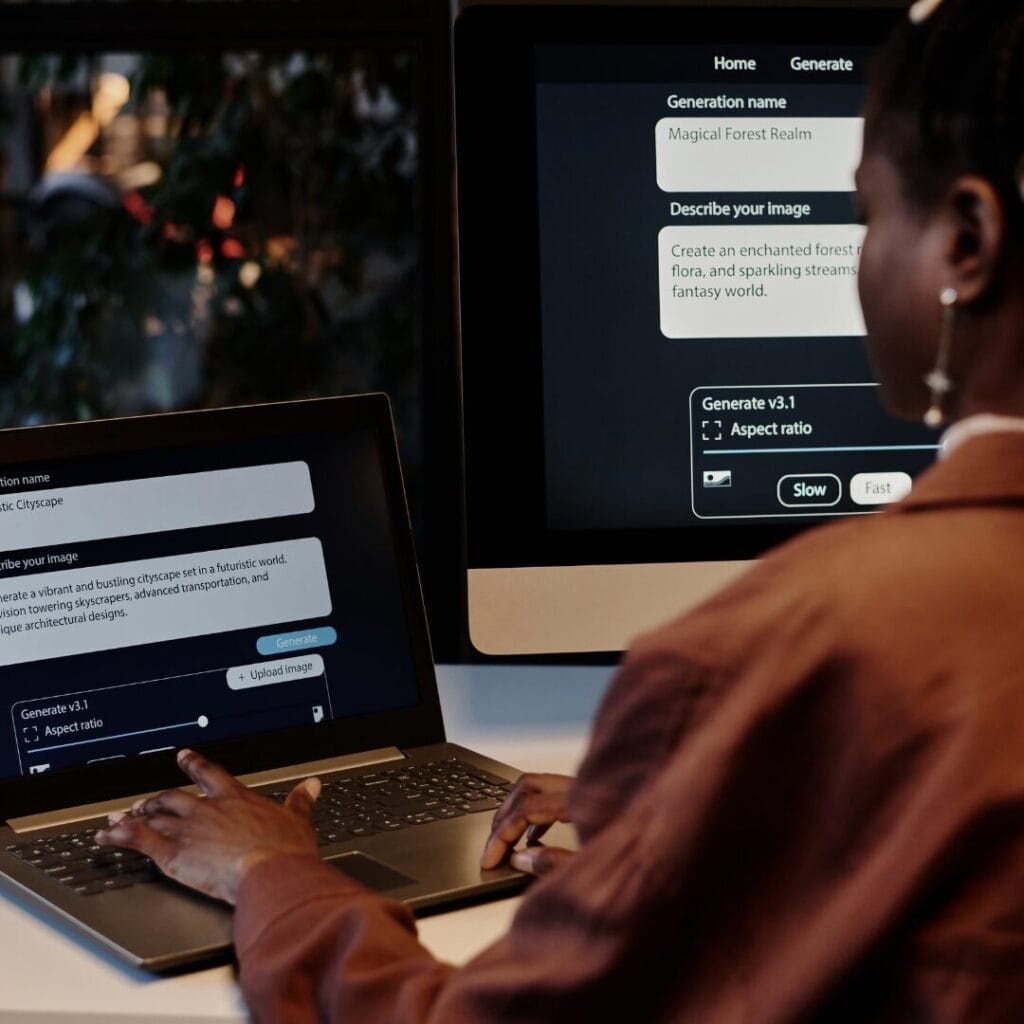
On March 13, 2026, the USPTO published supplemental guidance on design patent applications for designs comprising computer-generated icons and interfaces, expanding the scope of protection for these types of designs. In the guidance, the USPTO eliminated the requirement to depict in the design patent drawings the computer display panel that houses the icon or interface. The USPTO has also relaxed the title requirements for these types of designs and will now accept titles tying the icon or interface to the computer system using the word “for” (e.g., “icon for computer”). Further, other digital designs that allow a user to interact with a computer system but are not displayed on a conventional display screen, such as projections, holograms, and virtual and augmented reality interfaces, are now recognized as patent-eligible designs (previously, the requirement to depict the icon or interface within a display screen limited protection for these categories of designs). This guidance reflects a promising step forward for protecting interactive virtual designs generated using emerging technologies.
Charles Weigell, Alex Kochian, and Mary Stottele
DATA PRIVACY
Oklahoma – And then there were 20: Oklahoma enacts comprehensive data privacy law

On March 20, 2026, the Oklahoma Consumer Data Privacy Act (“OCDPA”) became the twentieth U.S. state comprehensive privacy law. Effective January 1, 2027, the law contains a mandatory 30-day cure period for violations. The Oklahoma Attorney General’s Office is the exclusive enforcement authority and may impose civil penalties of up to $7,500 per violation.
The OCDPA covers businesses that process personal data of at least 100,000 Oklahoma consumers. Consumers have the right to access, correct, delete, and port their data and to opt out of targeted advertising, sales of personal data, and certain types of profiling. Notably, businesses must obtain consent before processing sensitive data (e.g., health, biometric, geolocation, and children’s data) and must conduct data protection assessments for higher-risk processing activities. Like most state privacy laws, the OCDPA contains both entity-level and data-specific exemptions.
The statute requirements are not unique, but the 20 state privacy laws and lack of federal omnibus law create an uneven landscape of privacy obligations. Risks of non-compliance include regulatory enforcement and fines, reputational harm, and significant legal costs.
Carole Klinger and Eric Gordon
INTERNATIONAL
Canada – Federal court clarifies standard for introducing new evidence on appeal
In April 2025, Canada enacted amendments to its Trademarks Act, including changes to opposition proceedings at the Trademarks Opposition Board (“TMOB”). One such change was that parties can no longer automatically introduce new evidence at the appeal stage of a TMOB opposition – they must request permission and be granted leave by the court to introduce new evidence on appeal.
In two 2026 Federal Court decisions, Products Unlimited Inc v. Five Seasons Comfort Limited and Trademark Building v. Window World, justices relied on this new four-factor test to decide when it is appropriate to grant leave to introduce new evidence:
- Relevance, credibility, and admissibility of the evidence;
- Materiality of the evidence;
- Circumstances surrounding the delay in filing the evidence; and
- Whether granting permission for new evidence would cause prejudice to the opposing party.
This test provides a new framework for courts to balance these considerations, though the test is not fixed and the courts will consider whether to grant leave primarily based on the “interests of justice.” For example, one court applying the test granted leave to accept new evidence when certain data was not available at the time of the initial opposition (Factor 3: Delay) but rejected new evidence when it would not have altered the previous decision (Factor 2: Materiality).
Darra Frino
South Korea – No trademark infringement if owner alters branded goods for personal use
In 2022, Louis Vuitton sued Defendant Gangnamsa for fulfilling requests to alter and create new products from individual owners’ genuine Louis Vuitton handbags, claiming trademark infringement.
In 2024, the Korean Patent Court found trademark infringement based on reconstructing and “reforming” the product. In February 2026, the Supreme Court reversed this finding, holding that the defendant’s “reforming” or altering a trademark-branded good at the owner’s instruction for the owner’s personal, non-commercial use is not considered “use of a trademark” and thus not considered infringement.
The Court’s rationale is that those who purchase products for personal use are entitled to freedom of ownership and expression and that this policy advances environmental sustainability (e.g., recycling).
Darra Frino
Mexico – Comprehensive amendments to the federal industrial property law passed
Mexico passed broad-ranging amendments to the Federal Law for the Protection of Industrial Property (FLPIP). Among the amendments are (1) additional grounds for refusal to include copyrighted material, titles to certain publications, stage names, and artistic groups (absent consent of rights holders), as well as references to certain aspects of cultural heritage, (2) recognition of internationally well-known marks (even without use in Mexico), (3) expansion of protection for non-traditional marks (e.g., holographic, olfactory, trade dress); (4) timeframes for the IMPI to issue rulings including for opposition decisions, renewals, oppositions, and license recordal, as well as mechanisms to compel issuance of a decision by IMPI when a statutory deadline is not met, (5) provision for suspension of applications pending results of proceedings (including those under appeal), (6) electronic management of IMPI proceedings, (7) expansion of IMPI’s powers to include claims concerning ownership of registrations and commercial names, and (8) required recordal of changes to names, corporate names or the legal structure of registrant or applicant, to enforce against third parties.
Regulations are expected to issue in June. We are following this development closely.
Janet Hoffman
Qatar – Clarification on Class 33 specifications after adoption of 13th Edition of Nice classification
As reported in our January issue, the 13th Edition of the Nice Classification of Goods and Services took effect on January 1, 2026. Among the jurisdictions that have now adopted this edition are Australia, China, the EUTM, Singapore, South Africa, WIPO (Madrid), and a number of the MENA (Middle East and Northern Africa) countries, including Qatar. In March, the Qatari Ministry of Commerce and Industry advised that all classes will now be available for registration. Accordingly, applicants should be able to secure coverage for alcoholic beverages in Class 33, which was previously not permitted in Qatar.
Trademark owners with a business interest in Class 33 goods should review their portfolios in Qatar to determine whether to file, as unauthorized third parties are also watching this development.
Janet Hoffman
Qatar – Expanded digital copyright-related services
This month, the Ministry of Commerce and Industry, which is responsible for copyright-related recordal and certificate issuance, added new electronic services relating to copyright protection: namely, applications for certificates, issuance of “to whom it may concern” certificates, obtaining and amending copyright deposit extracts, and assignment recordal. This development should provide rights holders with increased efficiencies in the protection and enforcement of copyright.