









































USA
Thinking of embedding someone else’s video on your website? Be careful!
Richardson v. Townsquare Media, Inc., No. 25-291 (2d Cir. April 23, 2026)
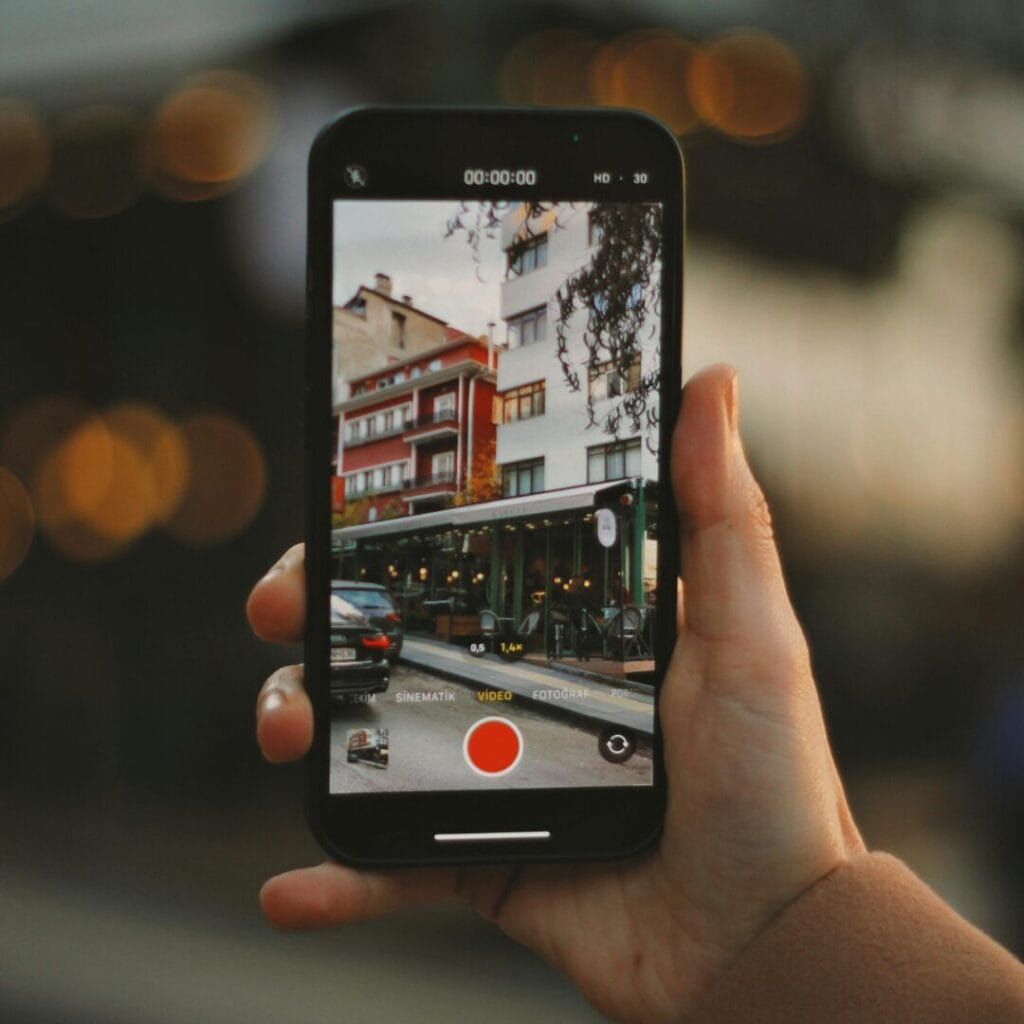
The Second Circuit assumed, without deciding, that unauthorized embedding constitutes copyright infringement. It held that Townsquare’s use of the video was not fair under Section 107 of the Copyright Act, 17 U.S.C. § 107, because it was not “transformative.” Townsquare had failed to “add something new, with a further purpose or different character, altering the original with new expression, meaning, or message.” Rather, Townsquare had “merely offered a substitute for the original work” by embedding the entire video and had used it for the same purpose as Richardson, namely to show Michael Jordan breaking up a fight. Townsquare’s commercial use and possible adverse impact on Richardson’s market for his video further weighed against fair use. Richardson also objected to Townsquare’s use of screenshots from the video. Townsquare argued this was de minimis. But the Second Circuit insisted the de minimis defense applies only when the images are “incidental or unidentifiable” in the defendant’s work. Finally, Townsquare’s use of Richardson’s videos of an interview with a rapper was not actionable because Richardson posted the interviews on YouTube, whose Terms of Service permit embedding.
Richard Lehv
DATA PRIVACY
Sweet Homepage Alabama: Another comprehensive privacy law takes its place on the map
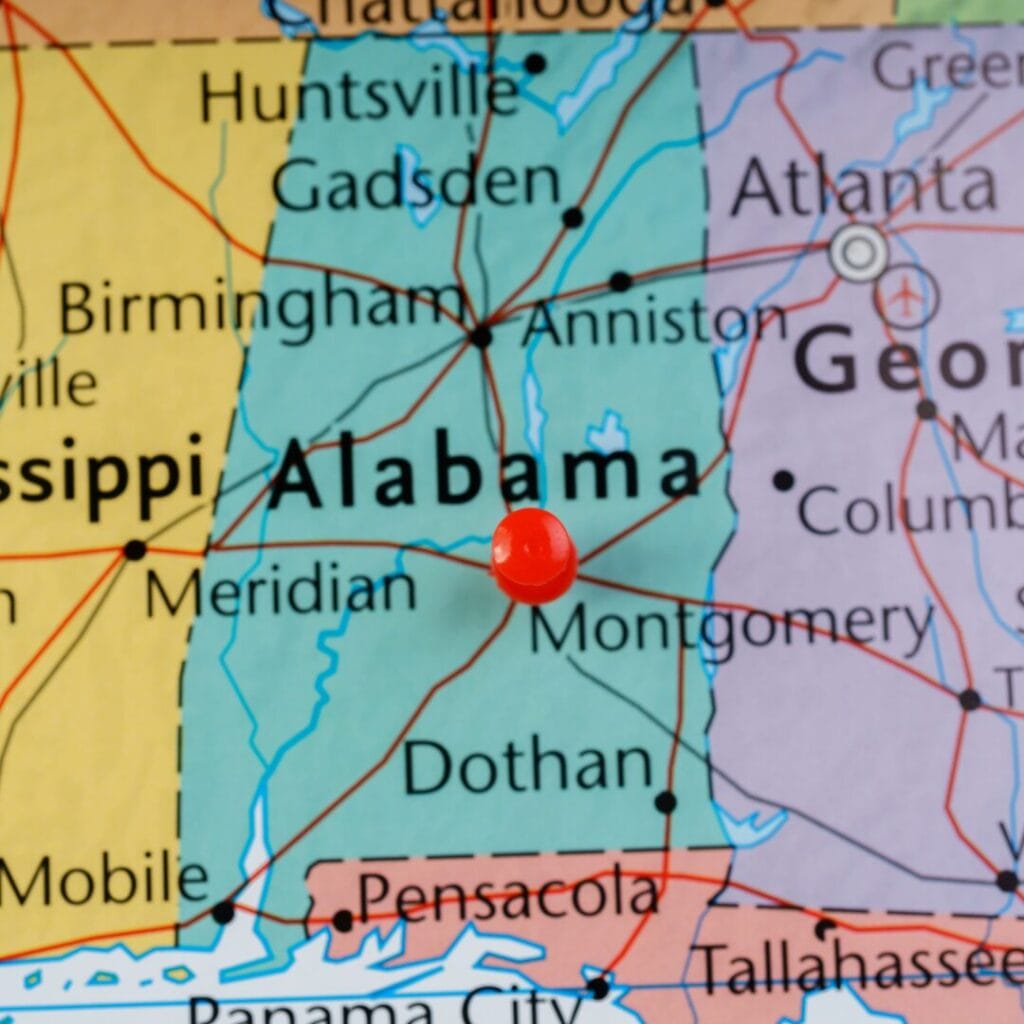
Effective May 1, 2027, the APDPA marks Alabama the twenty-first state to enact a comprehensive privacy law. With a low data-processing threshold of 25,000 state residents, the APDPA should find broad applicability for consumer-facing businesses. The APDPA largely tracks Virginia’s privacy statute, a common framework for U.S. privacy laws, but several details merit attention, including (1) no blanket exemption for all nonprofits (only smaller ones); (2) no applicability in B2B or employment contexts; (3) a unique definition of “sale” of personal data; (4) no data protection impact assessment requirement; (5) no universal opt-out obligation (e.g., Global Privacy Control); (6) no right to appeal a controller’s decision regarding consumer privacy rights requests; and (7) a 45-day notice-and-cure period, with no sunset. Enforcement authority sits with the Alabama Attorney General and civil penalties may reach $15,000 per violation, a relatively high number. While the APDPA adheres to familiar privacy law approaches, businesses across the country must still evaluate whether the statute requires modifications to their existing compliance programs.
Carole Klinger and Eric Gordon
Feeling insecure about the federal “SECURE Act”

On April 22, 2026, the U.S. House of Representatives released draft legislation entitled the Securing and Establishing Consumer Uniform Rights and Enforcement over Data Act (“SECURE Act”), which would establish a national U.S. comprehensive privacy law and effectively preempt the existing state comprehensive privacy laws. The SECURE Act includes many familiar provisions from existing laws and sets an applicability threshold for businesses. Specifically, the law applies to businesses that: (1) operate in the U.S. or process/sell U.S. residents’ personal data; (2) process the personal data of more than 200,000 persons annually; and (3) have annual gross revenue of at least $25 million. The bill includes many standard principles of state privacy laws, but regulators and privacy proponents have significant concerns about how state law preemption might complicate matters. Recently proposed federal privacy laws (e.g., those from 2022 and 2024) ultimately went nowhere. While the SECURE Act may be more palatable to businesses given its lack of a private right of action, the likelihood of this non-bipartisan bill’s passage, especially during this year of midterm elections and related political uncertainty, appears slim.
Carole Klinger and Eric Gordon
INTERNATIONAL
European Union – CJEU rules offline streaming downloads not “private copies”
Article 5(2)(b) of the Directive permits individuals to reproduce “offline streaming copies” of copyrighted works for personal use, if the use is neither directly nor indirectly commercial and rightsholders receive “fair compensation.” The CJEU has now ruled that such copies are not “private copies” within Art. 5(2)(b). The Court relied on the following factors:
- Streaming services make the source copy available under license from the copyright owner; users cannot access the offline copy outside the services’ platform; and users cannot move, transfer, or reproduce the offline copy.
- Copyright owners retain control over the work, since the offline copy is automatically erased once, inter alia, a user’s subscription terminates or an owner withdraws consent.
There is now no legal basis under the Directive to apply “private copy” levies to manufacturers of hardware on which offline streaming copies are saved. Copyright owners will need to source revenue for offline streaming copies from their licensing agreements with streaming platforms, without any additional or alternative private copy fees.
Cole Mathews
South Korea – Supreme Court holds golf course design protected by copyright
Golfplan, which designs golf courses, sued Golfzon, a content creator that recreated hundreds of Golfplan’s golf courses for golf video simulators. While the golf course owner had authorized Golfzon to recreate their courses virtually, Golfplan had not authorized it to recreate their golf course designs.
The principal issue in the case was whether the golf course designs were copyrightable. The lower court dismissed Golfplan’s claims for failure to demonstrate that the creative elements of the designs were separable from common and functional elements such as constraints of topography and hole placement. Consistent with a 2020 case that established game works creativity criteria, the Supreme Court reversed, holding that Golfplan had made independent, creative decisions on the selection, arrangement, and combination of components to create original designs (course shape, aesthetic appeal, and strategic challenge). Thus, Golfzon’s unauthorized copying constituted copyright infringement.
These cases set a precedent for recognizing copyrightability for creative works, even where functional elements may be present.
Darra Frino
Japan – Supreme Court rejects copyright claims of furniture manufacturer and designer
The Supreme Court recently issued a significant decision on the copyrightability of mass-produced useful articles, holding that such protection is available only in “exceptional” cases where the “creative expression” aspects of the goods can be “conceptually separated” from the goods’ functional features.
The case was brought by manufacturer Stokke AS and designer Peter Opsvik against a Japanese company that sold goods similar to their widely distributed Tripp Trapp child’s chair. Both lower courts denied copyright protection and the Supreme Court affirmed. Plaintiffs had argued that the frame, seat, and footrest arrangement were independent creative aspects of the product, separate from its functional features. The Court, however, considered those features inseparable from strictly utilitarian considerations. In a concurring opinion, one of the justices noted that other jurisdictions may have ruled differently, based on their national legislation concerning the line between copyright and design law. Given this decision, companies engaged in the useful articles business in Japan should consider a broad range of legal vehicles to protect their goods from unauthorized uses.
Janet Hoffman
Vietnam – Significant amendments to Vietnam’s trademark practice
The following key changes became effective April 1:
- substantive examination in five months (previously nine)
- publication period of one month (previously two)
- opposition deadline of three months from publication (previously five)
- expedited examination in three months (for national applications, under certain limited circumstances)
- AI-generated marks are now eligible for registration
It may also be easier now to prove bad faith when contesting piratical applications, including where a party files numerous applications exceeding its business capacity — a new ground for opposition. The evidentiary standard has also been softened. Where previously an objectional mark had to be identical or similar to a prior mark that is widely used in Vietnam, now the standard is: 1) relevant consumers in Vietnam would recognize the mark; and2) the mark is well-known in another country, such that the applicant must have filed with an improper intent (where previously proof of applicant’s intent was required).
This is a welcome change, especially for owners of well-known marks. Rightsholders active or planning to be active in this jurisdiction should take special note of the shortened timelines, including for filing of oppositions.
Janet Hoffman
Bulgaria – Significant updates to trademark law
In March, Bulgaria passed a number of significant amendments to the TMGIA. Among the changes especially important to owners of internationally well-known marks is that the Bulgarian Patent Office (BPO) is now empowered to rule on bad faith during the application process, avoiding the need for protracted prior court proceedings against piratical applications. The amendments also include: (1) expansion of protection for non-traditional marks, taking into account advances in technology, (2) broader BPO powers, including the ability to take immediate online enforcement action, (3) increased digitization of filings, (4) stronger enforcement against grey goods, and (5) enhanced enforcement bases to address the sending of infringing goods by post, courier, or other form of unauthorized transport. These changes are expected to create greater efficiencies in the protection and enforcement of trademarks, a welcome development for rightsholders active in this jurisdiction.
Janet Hoffman
El Salvador – El Salvador launches intellectual property dispute center
Launched by the National Registry Center through the Salvadoran Institute of Intellectual Property), the CEMCAPI has expanded the mechanisms available to resolve disputes involving trademarks, patents, copyrights, and other intellectual property rights. It also aims to reduce the burden on the judicial system by offering faster and more specialized proceedings. The Center may be particularly useful in disputes involving licenses, assignments, franchise agreements, infringement claims, trademark coexistence conflicts, oppositions, cancellation or nullity proceedings, and domain name disputes, among others. The Salvadoran Institute of Intellectual Property is also expected to issue complementary regulations to facilitate its implementation. This initiative opens the door to more flexible and commercially practical solutions to IP disputes in El Salvador.