














































USA
Third Circuit holds using Westlaw headnotes to train AI is not fair use

ROSS Intelligence, a now-defunct AI platform designed for lawyers, used 2,243 Westlaw headnotes to train its legal research platform. ROSS’s platform was “not a generative AI, meaning it would not create any new expression; it would only return text passages from preexisting judicial opinions.” But the district court rejected that fair use defense, finding that ROSS directly infringed Thomson Reuters’s copyrights in the headnotes. On appeal, ROSS argued that the headnotes lacked sufficient originality and reasserted its fair-use defense.
The Third Circuit affirmed partial summary judgment against Ross. The court held that Thomson Reuters’s creative decisions in drafting Westlaw headnotes demonstrated enough “creative spark” to satisfy originality. As for fair use, the court found that commercial use of the headnotes was “minimally transformative, at best,” because ROSS used the headnotes for the same purpose as Thomson Reuters –to create a legal research platform. The court also found that ROSS copied more than necessary, given that the underlying opinions were freely available to ROSS, and that ROSS’s copying harmed Thomson Reuters’s position in the legal research market and the potential market for licensing headnotes. Only the factual nature of the headnotes weighed in favor of finding fair use, and the court found this insufficient to carry the day.
Parker Eudy
Fifth Circuit adopts new test for copyright infringement for embedded website content

Emmerich publishes local newspapers and runs its own news websites. The defendant operates the NewsBreak website, which links to news from other sites, including Emmerich’s, using “in-line linking” or “embedding.” Embedding includes directing the user’s browser to incorporate content from the plaintiff’s server into the user’s browser window. Plaintiff claimed this infringed its exclusive right under Section 106 of the Copyright Act to “display the copyrighted work publicly.” It also claimed that its URLs constitute “copyright management information” (CMI) and that, by not showing the URLs, NewsBreak violated the Digital Millenium Copyright Act (DMCA).
The Ninth Circuit’s “server test” has held that “the owner of a computer that does not store and serve the electronic information to a user is not displaying that information,” such that embedding does not constitute copyright infringement. The Fifth Circuit, the only federal appellate court to consider the server test, leans on different parts of the copyright law to create its own test. It held that the right to publicly display a work grants copyright owners the exclusive right “[t]o show a fixed work by transmitting it to the public.” Under this test, an infringement claim based on embedding must show that either (1) the transmitted content originated from an unauthorized source (e.g., the defendant’s own servers), or (2) the defendant obtained and transmitted the content without authorization, such as by circumventing a paywall or other protective measures. Otherwise, the embedding does not infringe.
The Fifth Circuit acknowledges that its new test “likely provides similar results as the server test in many ways.” It also held a URL could constitute CMI if the URL clearly conveys the characteristics of CMI required by the statute and remanded the case to the district court.
Richard Lehv
ADVERTISING AND MARKETING
California gets real: Synthetic performer law brings new disclosure requirements
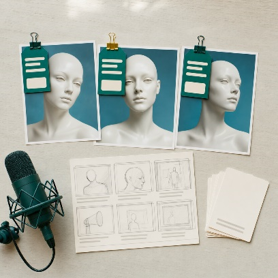
California’s SB 1050, effective January 1, 2027, requires advertisers to disclose use of “synthetic performers” in video, audiovisual, and audio-only advertisements published in California. “Synthetic performer” means a digital figure, voice, or representation, created wholly or partially using generative AI, that looks or sounds human but does not represent a real or identifiable person.
When a synthetic performer appears prominently, provides narration, or reacts to an advertisement’s message, then clear and conspicuous disclosure must be provided using the language, “this performance features a synthetic performer,” “no human performer is depicted,” or a substantially similar disclosure. Exemptions apply to ads for TV shows, films, and other expressive works where the performer’s appearance in the ad’s material is consistent with the performer’s appearance in the work.
California prosecutors may seek to stop noncompliant ads. Moreover, violations of SB 1050 are treated as unlawful false advertising under the California False Advertising Law, enforceable through the state’s Unfair Competition Law. This permits private rights of action in California, something not permitted under New York’s synthetic performer law.
Companies should review all use of synthetic performers featured in their ads; determine whether they, their agents, or their vendors must comply with SB 1050; and provide the proper disclosure.
Eric Gordon and Carole Klinger
DATA PRIVACY
Be aware of Delaware: Recent amendments expand coverage to more businesses

Starting January 1, 2027, amendments to Delaware’s Personal Data Privacy Act (DPDPA) under Delaware HB 380 will lower threshold applicability to businesses handling personal data of 10,000 or more Delaware consumers (down from 35,000) and to third parties to which covered businesses disclose such personal data. Other changes include:
- “Sensitive data” definition expanded to national origin, health status/treatment, financial account credentials, and government ID numbers, among other things, plus any inferences drawn from personal data, if they are related to an existing category of sensitive data. Processing sensitive data now requires consumer consent and must be reasonably necessary and proportionate to the disclosed processing purpose.
- Businesses must (i) conduct due diligence on third parties to whom they disclose personal data, (ii) enter contractual agreements with such third parties, and (iii) provide consumers with a list of such third parties upon request.
- Mandatory impact assessments for any profiling businesses engage in based on the personal information if this profiling results in legally significant decisions (e.g., employment, lending, or housing), plus notice to individuals about unfavorable outcomes to them.
- A new entity-level Gramm-Leach-Bliley Act exemption covers agents, broker-dealers, and investment advisors regulated by Delaware’s Investor Protection Unit or the SEC.
Businesses should examine now whether the DPDPA covers them, review privacy notices and vendor contracts, assess their handling of sensitive data, and consider how their privacy practices comply with the new obligations triggered by these amendments.
Eric Gordon and Carole Klinger
INTERNATIONAL
UAE and Qatar – The UAE and Qatar open Class 33 trademark filings for alcoholic beverages

In February 2026, Qatar announced that it had formally implemented the 13th edition of the Nice Classification. In March, Qatar’s Ministry of Commerce and Industry confirmed that all classes under the updated Nice framework are now open for registration in Qatar – including Class 33 (alcoholic beverages except beer), which was previously restricted. More recently, the UAE also announced that it is accepting trademark applications in Class 33, effective September 14, 2026. Under the new system, beer in Class 32 can also be registered without restrictions.
With these changes in Qatar and the UAE, alcoholic beverage brands no longer need to rely on alternative filing strategies, including looking to other classes (such as non-alcoholic beverages in Class 32), to protect their brands in these jurisdictions. Brand owners should review their trademark portfolios and consider whether filings in Class 33 in Qatar or the UAE are desirable to protect their marks before any opportunistic third parties get on file.
Cole Mathews
Australia – Court finds copyright infringement for snack product packaging

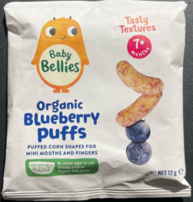
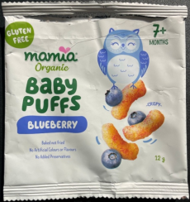
A lower court in Australia found that product packaging put out by supermarket chain Aldi’s Mamia baby snack puffs infringed on Hampden Holdings’ packaging for its Baby Bellies, Little Bellies, and Mighty Bellies snacks.
On appeal, Australia’s Full Court of the Federal Court upheld Aldi’s liability but found that five (and not just three) of Aldi’s products were infringing, and that Aldi’s conduct was considered flagrant. The Court also undertook a more detailed copyright infringement assessment, explaining that the appropriate approach is a side-by-side analysis comparing the reproduced design features to consider whether they were substantially reproduced. This included the overall combination of the cartoon character, cartoonish font, two-column layout of text and images, and the color palette, arrangement and cartoon style of fruit photography. Even though some of these individual elements are common in the market, they can still infringe when, in combination, they reproduce a substantial part of an original work.
Key takeaways: Brand owners should consider copyright claims for product packaging alongside trademark infringement and passing off claims and identify specific visual elements that have been reproduced. Businesses launching new product packaging designs should also document their independent design development and avoid superficial modifications to competitors’ product packaging.
Darra Frino
Singapore – Intellectual Property Office resumes expedited examination for trademark applications

Following an eight-month suspension of its fast-track examination program, the Intellectual Property Office of Singapore (IPOS) began on September 1, 2026, accepting new requests under its SG Trade Marks Fast acceleration program. Such requests for expedited examination of national Singapore trademark applications must be made at the time of filing. Applicants are not required to adopt the IPOS’ pre-approved description of goods and services, though the fees under the program will be lower for applicants who do. IPOS will aim to provide the first examination report (or notice of publication if no objections are raised) within three to six weeks of filing the application (whereas examination of standard applications takes approximately nine months).
This is a helpful development, as faster examination gives trademark applicants in Singapore more certainty, helping them make informed branding and business decisions sooner.